
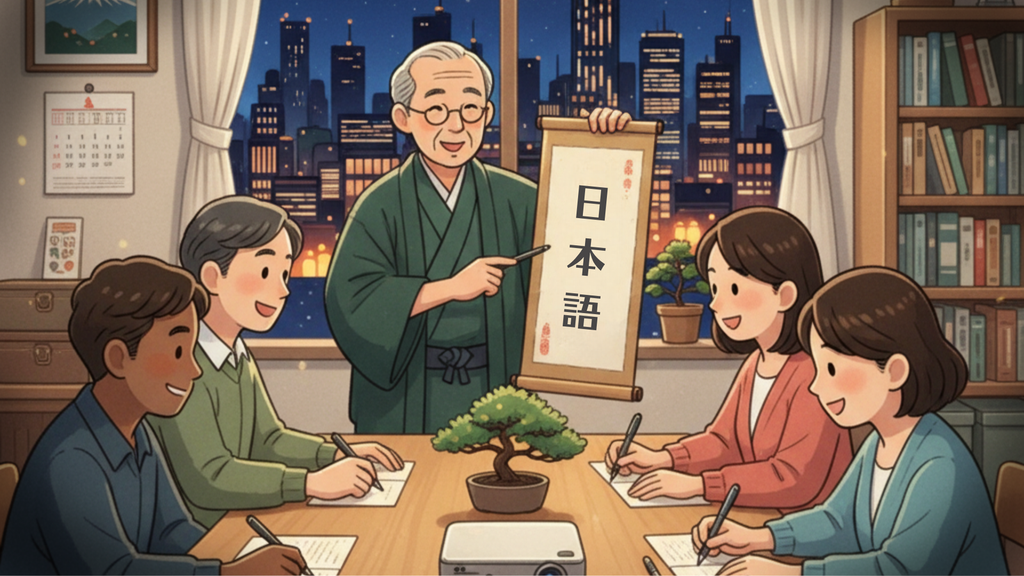
Konnichiwa, Minna! (Hello, everyone!)
Welcome to your first big step into the world of Japanese grammar. If you've just started learning Japanese, you might feel a little overwhelmed. But don't worry! This guide is designed to make learning your first 100 essential verbs as easy and fun as possible.
Verbs are the building blocks of any language, and Japanese is no different. Once you master these basic verbs, you'll be able to form countless sentences and start expressing yourself in no time.
This guide will focus on the most common and useful verbs for beginners. We'll present them in a way that helps you start using them right away, complete with their pronunciations and English meanings. Let’s dive in!
Japanese Verbs vs English Verbs
One of the first things you’ll notice about Japanese verbs is how different they are from English verbs. In English, we place the verb after the subject, like in the sentence “I eat.” In Japanese, the verb almost always comes at the very end of the sentence.
For example, to say “I eat rice,” you would say:
わたし は ごはん を たべます。 (watashi wa gohan o tabemasu.)
Here, たべます (tabemasu) is the verb, and it sits at the end. This structure is one of the most important things to get used to when you begin your journey!
Japanese Has No Singular or Plural Verbs
Good news! Unlike English, where you have to worry about singular verbs (e.g., “he eats”) and plural verbs (e.g., “we eat”), Japanese verbs do not change based on who is doing the action. The verb form stays the same no matter if the subject is "I," "you," "he," "she," or "they."
For example:
- わたし は たべます (watashi wa tabemasu) - I eat.
- かれ は たべます (kare wa tabemasu) - He eats.
- かれら は たべます (karera wa tabemasu) - They eat.
This makes things a lot simpler for beginners. You just need to learn the core verb forms!
Japanese Verb Conjugations
Japanese verbs are split into three groups: Ru-verbs, U-verbs, and irregular verbs. Which of these categories an action word belongs to affects its conjugation.
| Conjugation Form | Ru-verb (見る) | U-verb (飲む) | Irregular verb (来る) |
| Dictionary form | みる (miru) | 飲む (nomu) | くる (kuru) |
| Past Dictionary form | みた (mita) | 飲んだ (nonda) | きた (kita) |
| Negative Dictionary form | みない (minai) | 飲まない (nomanai) | こない (konai) |
| Present (ます) | みます (mimasu) | 飲みます (nomimasu) | きます (kimasu) |
| Present negative | みません (mimasen) | 飲みません (nomimasen) | きません (kimasen) |
| Past affirmative | みました (mimashita) | 飲みました (nomimashita) | きました (kimashita) |
| Past negative | みませんでした (mimasendeshita) | 飲みませんでした (nomimasendeshita) | きませんでした (kimasendeshita) |
Most Japanese verbs follow a clear logic. Ru-verbs and U-verbs conjugate predictably — e.g., みる (miru) → みない (minai), のむ (nomu) → のまない (nomanai). Irregular verbs don’t, so くる (kuru) becomes こない (konai).
The table shows only basic conjugations; for “-ing” forms like eating or drinking, you’ll need the て-form, which changes based on verb type.
100 Basic Japanese Verbs for Beginners
Types of Japanese Verbs
Japanese verbs are categorized into three main groups. Knowing these types will help you understand how to conjugate them later on.
- Group 1: U-verbs (or Godan Verbs): These verbs end in a "-u" sound. When you conjugate them, the sound changes. Most verbs fall into this category.
Examples: 行く (iku - to go), 読む (yomu - to read), 買う (kau - to buy).
- Group 2: Ru-verbs (or Ichidan Verbs): These verbs always end in "-iru" or "-eru." Conjugating them is much simpler, as you just drop the "-ru" and add a new ending.
Examples: 食べる (taberu - to eat), 見る (miru - to see), 寝る (neru - to sleep).
- Group 3: Irregular Verbs: Thankfully, there are only two of these! You just have to memorize.
Examples: する (suru - to do), 来る (kuru - to come).
Common Japanese Verbs for Mental Situations and Emotions
These verbs are essential for expressing thoughts, feelings, and understanding.
| Kanji | Hiragana | Romaji | English |
| 驚く | おどろく | odoroku | to be surprised |
| 泣く | なく | naku | cry |
| 怒る | おこる | okoru | get angry |
| 笑う | わらう | warau | laugh |
| 怖がる | こわがる | kowagaru | fear |
| 惚れる | ほれる | horeru | fall in love |
| 慌てる | あわてる | awateru | panic, be flustered |
| 慰める | なぐさめる | nagusameru | comfort, console |
| 思う | おもう | omou | think |
| 考える | かんがえる | kangaeru | consider |
| 褒める | ほめる | homeru | praise |
| 支える | ささえる | sasaeru | support |
| 忘れる | わすれる | wasureru | forget |
| 覚える | おぼえる | oboeru | remember, learn |
| 疲れる | つかれる | tsukareru | get tired |
| 信じる | しんじる | shinjiru | to believe |
| 要る | いれる | iru | to need |
| 間違える | まちがえる | machigaeru | make a mistake |
| 知る | しる | shiru | to know |
| 苦しむ | くるしむ | kurushimu | suffer |
| 痛む | いたむ | itamu | become hurt, damaged |
| 可愛がる | かわいがる | kawaigaru | love, be affectionate |
Japanese Verbs Commonly Used For Daily Activities at Home
| Kanji | Hiragana | Romaji | English |
| 住む | すむ | sumu | to live |
| 洗う | あらう | arau | to wash |
| 付ける | つける | tsukeru | to turn on (light) |
| 帰る | かえる | kaeru | to return (home) |
| 切る | きる | kiru | to cut |
| 手伝う | てつだう | tetsudau | help |
| 飲む | のむ | nomu | to drink |
| 食べる | たべる | taberu | to eat |
| 浴びる | あびる | abiru | bathe |
| 磨く | みがく | migaku | brush (teeth) |
| 寝る | ねる | neru | to sleep |
| 触る | さわる | sawaru | touch |
| 着る | きる | kiru | to wear |
| 届ける | とどける | todokeru | deliver |
| 焼く | やく | yaku | bake |
| 混ぜる | まぜる | mazeru | mix |
| 開ける | あける | akeru | to open |
| 入る | はいる | hairu | to enter |
| 出る | でる | deru | to leave |
| 作る | つくる | tsukuru | to make |
| 置く | おく | oku | to put |
| 遊ぶ | あそぶ | asobu | to play |
Japanese Verbs For Physical Actions
| Kanji | Hiragana | Romaji | English |
| 歩く | あるく | aruku | walk |
| 走る | はしる | hashiru | run |
| 登る | のぼる | noboru | climb |
| 泳ぐ | およぐ | oyogu | swim |
| 座る | すわる | suwaru | sit |
| 飛ぶ | とぶ | tobu | to fly |
| 来る | くる | kuru* | to come |
| 行く | いく | iku | to go |
| 通う | かよう | kayou | commute |
| 踊る | おどる | odoru | dance |
| 抱く | だく | daku | embrace, hug |
| 会う | あう | au | meet |
| 働く | はたらく | hataraku | to work |
| 書く | かく | kaku | to write |
| 消す | けす | kesu | to erase |
| 聞く | きく | kiku | to listen |
| 待つ | まつ | matsu | to wait |
| 動く | うごく | ugoku | to move |
| 次ぐ | つぐ | tsugu | be next |
| 見る | みる | miru | to see |
| 見せる | みせる | miseru | to show |
| 起きる | おきる | okiru | to get up |
| 降りる | おりる | oriru | to get off |
| 逃げる | にげる | nigeru | run away, escape |
| 倒れる | たおれる | taoreru | fall down, collapse |
| 急ぐ | いそぐ | isogu | to hurry |
| あげる | — | ageru | give |
| もらう | — | morau | receive |
| 終わる | おわる | owaru | to finish |
| 買う | かう | kau | to buy |
| 返す | かえす | kaesu | to return |
| 代わる | かわる | kawaru | switch |
| 押す | おす | osu | to push |
| 引く | ひく | hiku | to pull |
Japanese Verbs for Verbal Expressions
| Kanji | Hiragana | Romaji | English |
| 話す | はなす | hanasu | to speak |
| 言う | いう | iu | say |
| 歌う | うたう | utau | sing |
| 喋る | しゃべる | shaberu | to talk; to chat |
| 答える | こたえる | kotaeru | answer |
| 教える | おしえる | oshieru | teach, show |
| 聞く | きく | kiku | to ask |
| 頼む | たのむ | tanomu | to ask (favor) |
| 呼ぶ | よぶ | yobu | to call |
Irregular Japanese Verbs
| Kanji | Hiragana | Romaji | English |
| — | する | suru | to do |
| 電話する | でんわする | denwa suru | to call |
| 勉強する | べんきょうする | benkyou suru | to study |
| 宿題する | しゅくだいする | shukudai suru | to do homework |
| 復習する | ふくしゅうする | fukushuu suru | to review |
| 料理する | りょうりする | ryouri suru | cook |
| 練習する | れんしゅうする | renshuu suru | practice |
| 結婚する | けっこんする | kekkon suru | get married |
| 掃除する | そうじする | souji suru | to clean |
| 散歩する | さんぽする | sanpo suru | to take a stroll |
What’s Next After Learning Japanese Verbs?
Congratulations on completing your first big step! Once you’re comfortable with these verbs, here’s where to go next:
- Learn More Conjugations: Explore past tense (-mashita), negative (-masen), and the casual dictionary form.
- Master Particles: Use essential particles like を (o) and に (ni) to build natural, more complex sentences.
- Practice Daily: The best way to master verbs is to use them. Try creating one simple sentence for each verb you learn.
Remember — consistency matters more than perfection. Every sentence you form and every mistake you make brings you closer to fluency. Stay motivated, enjoy the process, and most importantly — keep practicing!
Ready to take your Japanese learning further?
Ganbatte! (Good luck!)
Comments
0 Comments
Submit a Comment
Your email address will not be published. Required fields are marked *